
If you are asking what is a wheelchair accessible taxi, you are probably not looking for a textbook definition. You want to know whether it will actually make the trip easier, safer and less stressful – whether that trip is to Perth Airport, a medical appointment, a family event or simply across town.
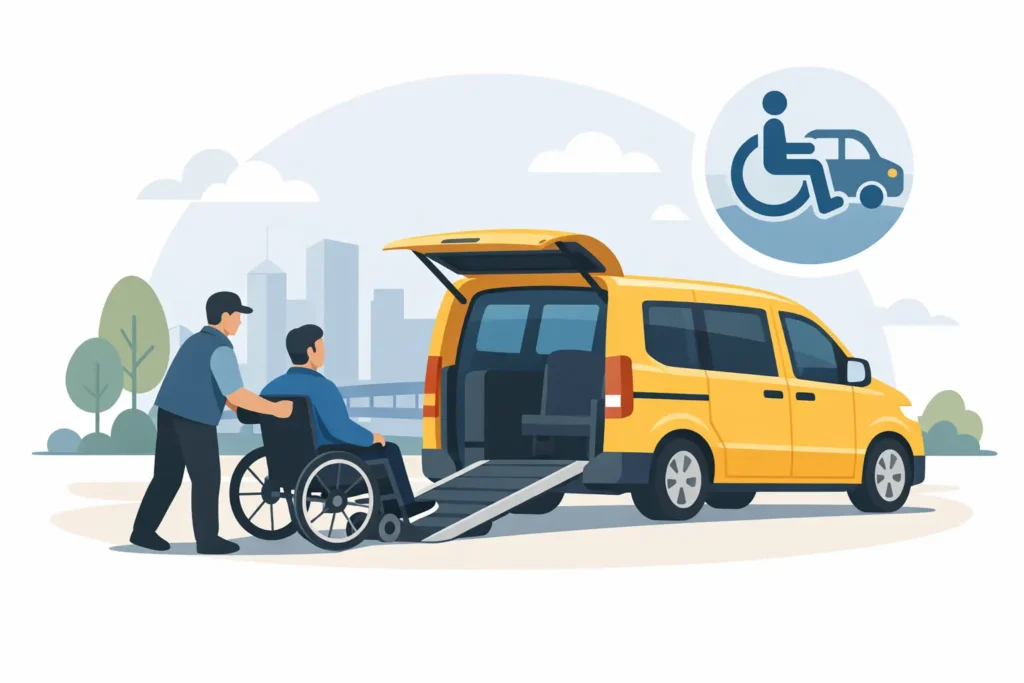
A wheelchair accessible taxi is a specially fitted vehicle designed to carry a passenger who remains in their wheelchair during travel, or who needs extra mobility support when getting in and out. Unlike a standard taxi, it is set up with access equipment and restraint systems so the passenger and wheelchair can travel securely. In practical terms, it is transport built around dignity, comfort and safety rather than making the passenger adapt to the vehicle.
What is a wheelchair accessible taxi designed to do?
The main difference is simple. A standard sedan or wagon may be fine for many passengers, but it often does not have the space, entry height or equipment needed for wheelchair travel. A wheelchair accessible taxi is designed to remove those barriers.
That usually means a vehicle with a ramp or hoist, enough interior room for a wheelchair to be positioned properly, and anchor points that secure the wheelchair in place during the journey. There is also a passenger seatbelt system fitted so the person travelling is restrained safely, just like any other passenger.
For many people, that means fewer awkward transfers, less physical strain and a more predictable trip. For carers and family members, it can mean less lifting, less rushing and less concern about whether the vehicle arriving is suitable.
The key features of a wheelchair accessible taxi
Not every accessible vehicle is identical, but most are equipped for the same purpose. The focus is on safe entry, secure travel and enough space to make the trip practical.
Ramp or hoist access
Many wheelchair accessible taxis use a rear or side-entry ramp. Some vehicles use a hoist instead, depending on the setup. The best option can depend on the passenger’s wheelchair type, mobility level and how much support they need. A ramp is often straightforward and efficient, while a hoist can be useful in situations where the wheelchair is heavier or access needs are more specific.
Wheelchair restraint systems
This is one of the most important parts of the vehicle. The wheelchair is secured using dedicated restraints to limit movement while the taxi is in transit. The passenger is then fitted with a seatbelt or occupant restraint, separate from the wheelchair tie-downs.
Extra cabin space
Accessible taxis are generally larger than standard cabs. That extra room matters. It helps with turning space, positioning the wheelchair properly and making entry and exit more comfortable. It can also allow room for a companion, family member or carer to travel in the same vehicle.
Support from a trained driver
A proper wheelchair accessible taxi service is not only about the vehicle. It is also about the driver understanding how to operate the access equipment, secure the wheelchair correctly and give the passenger time and assistance without making the trip feel rushed.
Who uses a wheelchair accessible taxi?
The obvious answer is wheelchair users, but the need is often broader than people first assume. Some passengers use a wheelchair full-time and remain seated in it for the journey. Others may use a wheelchair part-time or for longer outings where fatigue is an issue.
Accessible taxis are also useful for older passengers with reduced mobility, people recovering from surgery, and those attending regular medical or rehabilitation appointments. In some cases, the passenger may be able to transfer into a seat, but still need a vehicle with easier entry, more space or patient assistance.
That is why booking the right vehicle matters. Accessibility is not always one-size-fits-all. A manual wheelchair, powered wheelchair and mobility scooter can all involve different space and loading requirements.
What is a wheelchair accessible taxi booking like?
For most people, the biggest concern is not the ride itself. It is whether the booking process will be simple and whether the right vehicle will turn up on time.
When booking a wheelchair accessible taxi, it helps to provide clear details upfront. That usually includes the pickup suburb, destination, preferred time, whether the passenger will remain in the wheelchair, and whether the chair is manual or powered. If there is a carer travelling too, or extra luggage, that is worth mentioning as well.
Pre-booking is usually the safest option, especially for airport runs, medical visits, family gatherings or any trip with a fixed appointment time. It reduces the risk of delays and gives the transport provider time to allocate a suitable vehicle.
For Perth passengers, this is especially useful when travelling across metropolitan suburbs or arranging transport at busier times of day. A pre-booked accessible cab gives everyone more certainty.
Why wheelchair accessible taxis matter beyond transport
There is a practical side to this service, but there is also a human one. Accessible transport affects whether people can attend appointments on time, participate in family events, travel without stress and stay connected to everyday life.
When a person cannot rely on suitable transport, even simple plans become complicated. A dinner out, school function, airport transfer or specialist appointment can turn into a long chain of phone calls and backup plans. Reliable wheelchair accessible taxis help remove that friction.
That matters not just for the passenger, but for the people around them. Family members, support workers and carers often carry the planning load. A dependable service can make ordinary outings feel manageable again.
What to expect on the day of travel
A good wheelchair accessible taxi trip should feel calm and organised. The driver should arrive with a vehicle that matches the booking requirements, position the taxi safely for boarding, and allow enough time for the ramp or hoist to be used properly.
Once the passenger is in place, the wheelchair should be secured before travel begins. If the passenger is travelling with family or a support person, the seating arrangement should be workable and comfortable. The trip itself should not feel any different from a normal taxi journey in terms of route, timing or fare structure unless the booking includes special arrangements.
The best services understand that people are often travelling for important reasons. It might be a hospital trip, an airport departure, a wedding, or simply a family visit that has taken effort to organise. Small things like punctuality, patience and clear communication make a big difference.
Are all accessible taxis the same?
Not quite, and this is where expectations matter. Some accessible vehicles are better suited to single-passenger mobility travel, while others can carry extra family members or luggage as well. Some are ideal for local appointments, while others are a better fit for longer journeys such as airport transfers.
Service quality can vary too. A suitable vehicle is essential, but reliability is just as important. There is little value in booking an accessible taxi if it arrives late, lacks the right setup or leaves the passenger feeling hurried.
That is why many people prefer booking with a local operator that understands practical transport needs, not just the booking itself. In Perth, a service such as Maxi & Wheelchair Cabs Perth is built around that everyday reality – moving people comfortably, safely and on time.
How to know if a wheelchair accessible taxi is right for your trip
If the passenger needs to stay in their wheelchair during travel, the answer is fairly clear. You need a properly fitted wheelchair accessible taxi, not a standard cab with extra boot space.
If the passenger can transfer but struggles with steps, low seats or tight vehicle access, it depends on the level of support needed. In some cases, a larger vehicle with easier entry may help. In others, full wheelchair access is still the better choice because it reduces physical strain and makes the trip safer.
It also depends on the purpose of travel. For medical appointments, airport transfers and timed events, certainty matters more. Choosing the right vehicle from the start can prevent a lot of last-minute stress.
What is a wheelchair accessible taxi really for?
At its core, it is not just a modified vehicle. It is a transport service that gives people a practical way to travel with comfort, safety and respect. It helps passengers get where they need to go without unnecessary barriers, and it gives families and carers more confidence that the trip can happen smoothly.
That might sound straightforward, but in real life it changes a lot. It can mean making an early flight without the usual worry, getting to a specialist on time, attending a wedding without complicated transfers, or simply being able to say yes to plans more often.
If you are booking transport for yourself, a family member or someone you support, the most useful question is not only what is a wheelchair accessible taxi. It is whether the service understands what the journey actually involves – and whether it can make that journey feel easier from the moment you book.


